I’ll be honest: percentages are one of those things that seem easy until someone suddenly asks you, “Okay, so what’s 17% of 240?”
That’s usually when I reach for a calculator.
We use percentages everywhere. A store says something is 30% off. Your bank gives you an interest rate. You get a score on a test. Your salary goes up. A business makes a certain percentage of profit.
Once you understand the basic idea, though, percentages become much less intimidating.
So let’s go through it slowly, with some examples that actually make sense in everyday life.
And if you’re here because you just need an answer quickly, you can also use the Percentage Calculator on ToolBoxUp and let it do the math for you.
First, What Does “Percentage” Actually Mean?
The word percentage comes down to one simple idea:
“Out of 100.”
That’s it.
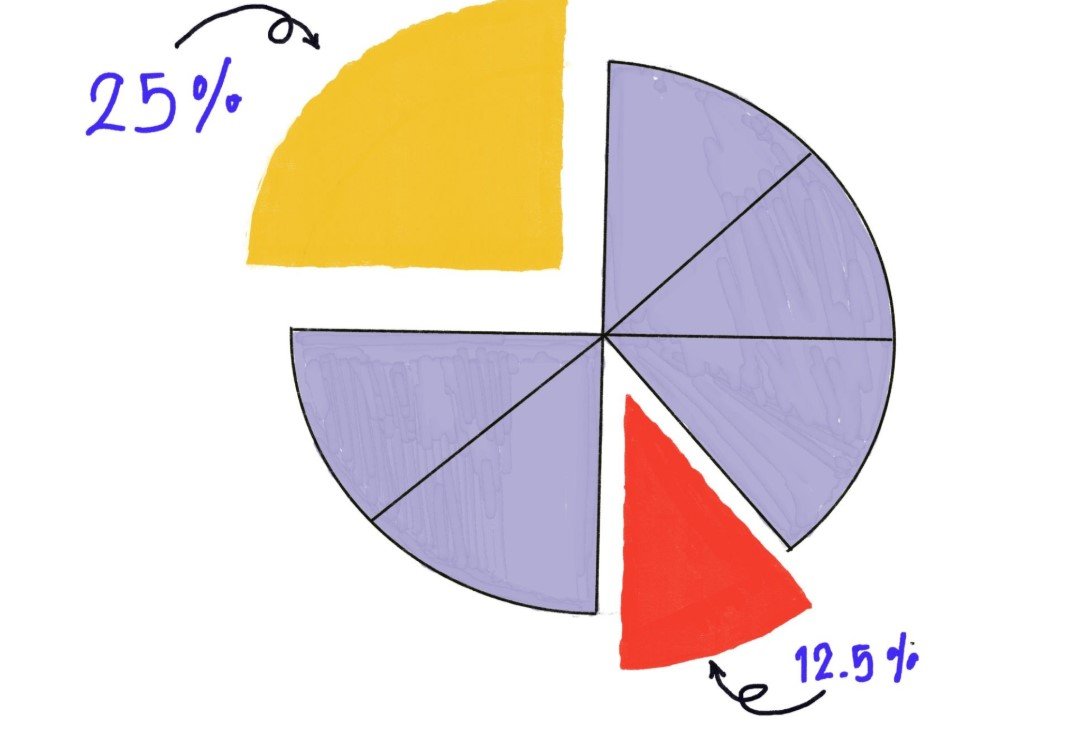
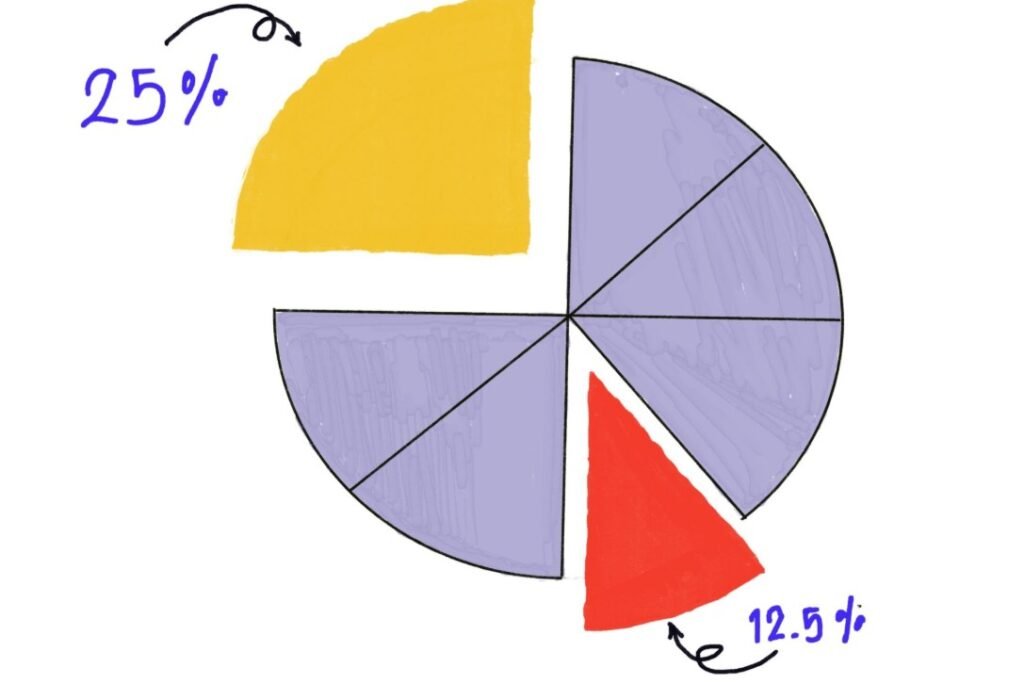
If something is 50%, it means 50 out of 100.
If it’s 25%, it means 25 out of 100.
If it’s 5%, it means 5 out of 100.
You can think of 100 as the whole thing, and the percentage tells you how much of that whole you’re talking about.
For example, if you eat 30 out of 100 pieces of something (hopefully not cake), you’ve eaten 30%.
The Basic Percentage Formula
The formula most people need is:
Percentage = (Part ÷ Whole) × 100
It might look a little formal, but it’s actually very simple.
Let’s say you got 18 questions right out of 20 on a test.
Put the numbers into the formula:
(18 ÷ 20) × 100 = 90%
So your score is 90%.
Pretty straightforward.
How to Find a Percentage of a Number
This is probably the type of percentage calculation people use most often.
Imagine you’re shopping and find something that costs $80, but there’s a 25% discount.
How much money are you actually saving?
First, turn 25% into a decimal:
25 ÷ 100 = 0.25
Then multiply:
80 × 0.25 = 20
So you’re saving $20.
That means the final price is:
$80 − $20 = $60
That’s a lot easier than trying to figure it out while standing in a store with a long line behind you.
How to Find What Percentage One Number Is of Another
Let’s say you have a website and it gets 750 visitors in a day.
Out of those visitors, 150 people sign up for something.
You might wonder, “What percentage of my visitors actually signed up?”
Here’s the calculation:
(150 ÷ 750) × 100 = 20%
So your signup rate is 20%.
The same calculation works for much more than websites. You can use it for exam results, sales, survey responses, business numbers, and pretty much any situation where you want to compare one part with a larger whole.
How to Calculate a Percentage Increase
This one comes up a lot when prices, salaries, or other numbers change.
Let’s say you bought something last year for $50.
Today, the same thing costs $60.
First, find out how much the price increased:
$60 − $50 = $10
Now compare that $10 increase with the original $50:
10 ÷ 50 = 0.2
Multiply by 100:
0.2 × 100 = 20%
So the price went up by 20%.
One small thing to remember here: when calculating an increase, you normally compare the change with the original number.
That’s an easy detail to miss.
How to Calculate a Percentage Decrease
It’s basically the same idea, but this time the number gets smaller.
Let’s say a pair of shoes originally costs $100, but they’re now on sale for $75.
The price dropped by:
$100 − $75 = $25
Now divide the difference by the original price:
25 ÷ 100 = 0.25
Multiply by 100:
0.25 × 100 = 25%
So the shoes are 25% cheaper.
And yes, this is exactly the kind of calculation where having a calculator nearby can save you from doing the math twice.
Some Percentage Shortcuts I Use All the Time
You don’t always need to pull out your phone.
There are a few percentages that are really easy to calculate mentally.
10%
Just move the decimal point one place to the left.
10% of $90 = $9
10% of $250 = $25
50%
Just divide by two.
50% of $80 = $40
25%
Divide by four.
25% of $80 = $20
5%
Find 10% and divide that result by two.
5% of $80 = $4
These little shortcuts are surprisingly useful, especially when you’re shopping or trying to quickly estimate a number.
A Few Real-Life Percentage Examples
Let’s look at a few situations where percentages show up in normal life.
You’re Shopping
A jacket costs $200 and is 30% off.
30% of $200 = $60
So you pay:
$200 − $60 = $140
You’re Leaving a Tip
Your restaurant bill is $50 and you want to leave a 15% tip.
15% of $50 = $7.50
Your total would be:
$57.50
You’re Checking a Test Score
You answered 45 questions correctly out of 50.
(45 ÷ 50) × 100 = 90%
So you scored 90%.
You’re Looking at a Business Profit
You buy a product for $40 and sell it for $50.
Your profit is $10.
It might seem like the profit percentage is automatically 20%, but be careful. There are different ways of expressing profit percentage, depending on whether you’re comparing the profit with the cost or the selling price.
This is one reason it’s important to understand what a percentage is actually being calculated from.
Why a 20% Increase and a 20% Decrease Don’t Cancel Each Other Out
This confused me the first time I thought about it.
Imagine something costs $100.
It increases by 20%.
Now it’s:
$120
Then the price drops by 20%.
You might expect it to return to $100.
It doesn’t.
20% of $120 is $24.
So the new price is:
$120 − $24 = $96
You ended up at $96, not $100.
Why?
Because the second 20% was calculated from $120, not from the original $100.
It’s a small detail, but it becomes important when you’re comparing prices, investments, salaries, or business numbers.
Do You Need to Calculate Percentages by Hand?
Not necessarily.
Knowing the formula is useful because it helps you understand what’s happening. But there’s nothing wrong with using a calculator when the numbers get annoying.
Personally, if I’m trying to calculate something like 17.5% of 846, I’m probably not doing that in my head.
That’s exactly why we built the Percentage Calculator on ToolBoxUp.
You enter the numbers, and you get the result without having to remember the formula every time.
The Three Percentage Calculations You Should Know
If you remember only three things from this article, make them these:
1. Find what percentage one number is of another:
(Part ÷ Whole) × 100
2. Find a percentage of a number:
Number × (Percentage ÷ 100)
3. Find percentage change:
(Change ÷ Original Value) × 100
Once you know these three, you can handle most of the percentage questions you’re likely to run into.
Final Thoughts
Percentages really aren’t as complicated as they sometimes look.
The trick is to stop thinking of them as some special type of math and remember what they actually mean: a part of 100.
Whether you’re checking a test score, calculating a discount, working out a tip, comparing prices, or looking at business numbers, the same basic idea keeps coming back.
And when the numbers get messy, there’s no prize for doing the calculation in your head.
Use a calculator.
Try the Percentage Calculator on ToolBoxUp and get your answer in seconds.
Frequently Asked Questions
How do I calculate a percentage?
Divide the part by the whole and multiply the result by 100.
For example, if you have 20 out of 25:
(20 ÷ 25) × 100 = 80%
How do I calculate 20% of a number?
Convert 20% to a decimal (0.20) and multiply it by the number.
For example:
20% of 150 = 150 × 0.20 = 30
How do I calculate a percentage increase?
Subtract the original number from the new number, divide the difference by the original number, and multiply by 100.
How do I calculate a percentage decrease?
Subtract the new number from the original number, divide the difference by the original number, and multiply by 100.
Can I calculate percentages without a calculator?
Absolutely. Simple percentages such as 10%, 25%, and 50% can often be worked out mentally. For more complicated numbers, using a calculator is usually faster and less likely to lead to a mistake.
What is the easiest way to calculate a percentage?
For everyday calculations, the easiest method is usually to convert the percentage into a decimal and multiply it by the number.
For example:
15% = 0.15
So:
15% of 200 = 200 × 0.15 = 30